
- Simpson Family Moving
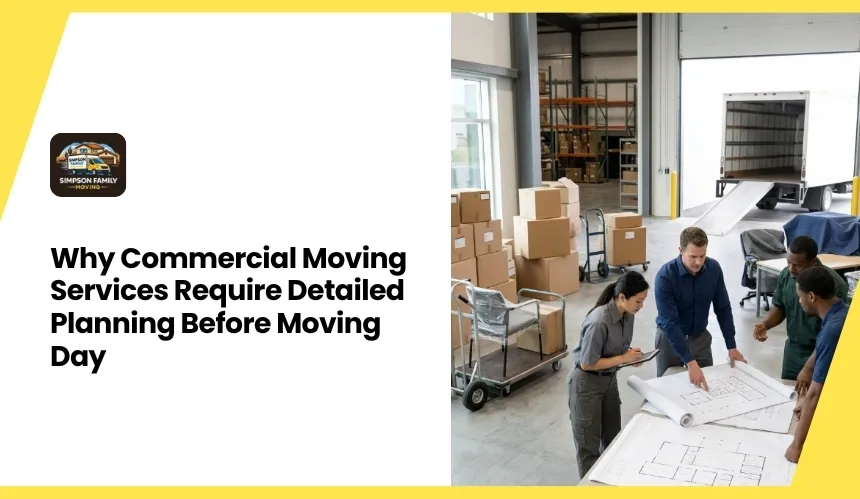
Why Commercial Moving Services Require Detailed Planning Before Moving Day
Commercial relocation involves far more operational complexity than a standard residential move. Businesses must manage equipment transportation, employee coordination, technology systems, inventory protection, scheduling continuity, workspace setup, and operational downtime simultaneously. Without detailed planning, even a relatively small commercial move can disrupt productivity, delay business operations, damage equipment, and create communication breakdowns across departments.
Professional commercial moving services help businesses reduce these risks through structured relocation planning, logistical coordination, asset management, and transportation strategy. Commercial moves often involve sensitive electronics, office furniture systems, confidential records, specialized machinery, or customer-facing infrastructure that cannot be handled through improvised relocation methods.
Detailed planning before moving day helps businesses minimize downtime, maintain workflow continuity, improve transportation efficiency, and reduce operational disruption during the transition. The following sections explain why commercial moving requires a strategic planning process and how professional movers coordinate complex business relocations from start to finish.
Commercial Relocation Involves Multiple Operational Systems Simultaneously
Unlike residential moves, commercial relocations affect interconnected business functions that must remain organized throughout the transition. Office operations, communication systems, employee workflows, inventory access, technology infrastructure, and customer service processes may all be impacted during the move.
Because of this complexity, commercial moving requires detailed coordination long before moving day arrives.
Why Business Downtime Creates Financial Pressure
Operational interruptions during relocation may reduce productivity, delay customer communication, interrupt internal processes, and affect revenue generation.
Unplanned downtime can contribute to:
- Missed deadlines
- Delayed client responses
- Workflow disruption
- Reduced employee productivity
- Inventory inaccessibility
- Scheduling complications
Detailed moving plans help businesses reduce these operational interruptions during relocation.
How Department Coordination Affects Relocation Efficiency
Commercial moves often require multiple departments to remain synchronized throughout the transition process. IT teams, operations staff, management personnel, vendors, and moving coordinators may all depend on aligned scheduling.
Without proper coordination, businesses may experience:
- Equipment misplacement
- Workspace setup delays
- Communication breakdowns
- Technology installation conflicts
- Employee confusion
Structured planning helps prevent these operational bottlenecks before moving day begins.
Pre-Move Assessments Help Identify Logistical Challenges Early
One of the most important stages of commercial relocation is the pre-move assessment. Professional movers evaluate the business environment, transportation access, equipment requirements, and relocation complexity before creating the final moving strategy.
Early assessments help reduce unexpected problems during the actual move.
What Commercial Movers Evaluate Before Relocation
Commercial moving companies assess multiple operational details that affect transportation planning and labor coordination.
Pre-move evaluations often include:
- Office layout analysis
- Equipment inventory review
- Loading dock accessibility
- Elevator coordination
- Parking availability
- Building restrictions
- Furniture disassembly needs
- Technology infrastructure planning
- File storage requirements
These evaluations help movers build a structured relocation timeline.
Why Access Conditions Affect Moving Efficiency
Commercial properties often present unique access challenges that can delay relocation if not properly planned.
Potential complications may include:
- Freight elevator scheduling
- Limited loading zones
- Time-restricted building access
- Shared tenant spaces
- Security clearance procedures
- High-rise transportation logistics
Planning these details in advance improves operational efficiency during moving day.
Technology And Equipment Relocation Requires Specialized Planning
Modern businesses rely heavily on interconnected technology systems that cannot simply be disconnected and transported without preparation. Servers, workstations, networking systems, telecommunications equipment, and specialized machinery often require coordinated shutdown, transportation, and reinstallation procedures.
Technology-related delays are one of the most common causes of extended commercial downtime.
Why IT Coordination Is Critical During Commercial Moves
Technology infrastructure affects communication, operations, scheduling, customer management, and internal workflow systems.
Commercial relocation planning often includes:
- Server shutdown scheduling
- Data backup procedures
- Cable labeling systems
- Network disconnection planning
- Equipment sequencing
- Workstation organization
- Internet installation coordination
These preparations help reduce technical disruption after relocation.
How Sensitive Equipment Requires Additional Protection
Commercial equipment often includes fragile electronics, specialized machinery, or confidential systems that require enhanced protection during transportation.
Professional movers may use:
- Anti-static packaging
- Custom crates
- Protective padding
- Equipment stabilization systems
- Climate-sensitive transportation methods
These precautions help reduce the risk of operational damage during transit.
Inventory Organization Improves Moving Accuracy And Accountability
Commercial relocations often involve large quantities of office furniture, files, electronics, supplies, and departmental assets. Without organized inventory systems, businesses may struggle to track items during transportation and setup.
Detailed inventory management helps reduce confusion throughout the move.
Why Asset Tracking Matters During Commercial Relocation
Misplaced business equipment can disrupt operations long after the move itself is completed.
Inventory tracking systems help businesses:
- Monitor equipment movement
- Verify delivery completion
- Organize departmental assets
- Reduce misplaced items
- Improve unpacking efficiency
Professional movers often label items strategically to support an organized workspace setup after delivery.
How Labeling Systems Improve Workspace Setup
Commercial relocation involves much more than unloading boxes into a building. Employees often need immediate access to workstations, files, and operational equipment after the move.
Structured labeling helps improve:
- Department organization
- Furniture placement
- Technology setup
- Employee workstation preparation
- Equipment accessibility
This organization helps businesses resume operations more efficiently after relocation.
Commercial Moving Timelines Must Be Carefully Sequenced
Unlike residential relocation, commercial moving schedules often depend on operational deadlines, lease agreements, employee availability, vendor coordination, and technology setup requirements. Improper timing can create major workflow disruption.
Detailed scheduling helps businesses transition more smoothly between locations.
Why After-Hours Moving Is Common For Businesses
Many companies schedule relocation activities during evenings, weekends, or low-traffic business periods to reduce operational disruption.
After-hours moving may help minimize:
- Customer service interruptions
- Employee downtime
- Workflow delays
- Parking congestion
- Elevator scheduling conflicts
This scheduling strategy allows businesses to maintain more consistent operations during the transition.
How Phased Relocation Reduces Operational Disruption
Larger commercial moves are sometimes completed in stages rather than all at once. Phased relocation helps businesses maintain partial operations while departments transition gradually.
Phased moving plans may involve:
- Department-by-department relocation
- Equipment sequencing
- Temporary workspace coordination
- Staggered employee transitions
- Priority system installation
This approach reduces pressure on business continuity during larger relocations.
Furniture Disassembly And Space Planning Require Preparation
Commercial furniture systems are often more complex than residential furniture because they involve modular workstations, conference installations, filing systems, and integrated office layouts.
Professional movers must carefully coordinate both disassembly and reinstallation.
Why Office Furniture Requires Structured Handling
Cubicles, conference systems, shelving units, and modular furniture often require organized disassembly procedures to avoid missing hardware or incorrect reassembly.
Professional movers may coordinate:
- Hardware labeling
- Furniture mapping
- Panel organization
- Assembly sequencing
- Protective wrapping
This preparation improves installation efficiency at the new location.
How Space Planning Supports Faster Operational Recovery
Workspace organization affects employee productivity immediately after relocation. Poor office layout planning can delay workflow restoration and create confusion throughout departments.
Pre-move space planning helps improve:
- Workstation setup efficiency
- Department organization
- Traffic flow
- Equipment accessibility
- Collaboration areas
Businesses often regain operational stability more quickly when workspace layouts are planned before moving day.
Communication Planning Helps Prevent Relocation Confusion
Commercial moves affect employees, clients, vendors, service providers, and management teams simultaneously. Without clear communication systems, scheduling misunderstandings and operational confusion can spread quickly during relocation.
Structured communication planning helps businesses maintain organization throughout the transition.
Why Employee Communication Is Important During Relocation
Employees often depend on accurate relocation updates to prepare workstations, manage schedules, and coordinate responsibilities.
Communication planning may involve:
- Move-day schedules
- Department relocation instructions
- Workspace assignments
- Technology transition updates
- Access procedures
Clear communication helps reduce uncertainty and workflow disruption.
How Vendor Coordination Supports Business Continuity
Commercial relocations often require coordination with internet providers, security companies, furniture installers, utility services, and building management teams.
Without proper scheduling, businesses may experience:
- Delayed internet activation
- Security system interruptions
- Incomplete office setup
- Utility activation delays
Advance coordination helps reduce operational downtime after the move.
Final Perspective
Commercial relocation involves operational, logistical, and technological challenges that require far more preparation than standard residential moves. Without detailed planning, businesses may experience unnecessary downtime, workflow disruptions, equipment damage, and scheduling confusion during the transition.
Professional commercial moving services help businesses manage these complexities through structured planning, inventory coordination, transportation strategy, technology preparation, and communication systems. Understanding why detailed pre-move planning matters helps businesses protect productivity, improve operational continuity, and complete relocations more efficiently from start to finish.
Frequently Asked Questions
Commercial moves affect technology systems, employee workflow, equipment transportation, customer operations, and scheduling simultaneously. Detailed planning helps reduce downtime, improve coordination, and minimize operational disruption throughout the relocation process.
Professional movers often provide packing, furniture disassembly, equipment transportation, inventory tracking, loading and unloading, technology coordination support, storage solutions, and workspace setup assistance during commercial relocations.
Asset tracking helps businesses monitor equipment movement, reduce misplaced items, improve unpacking organization, and support faster workspace setup after delivery. Organized inventory systems improve accountability throughout the moving process.
Many businesses reduce disruption by scheduling after-hours moves, coordinating phased relocations, preparing technology systems in advance, and organizing workspace layouts before moving day begins.
Professional commercial movers often use specialized packaging, protective materials, equipment stabilization systems, and organized transportation methods designed to protect sensitive electronics and operational equipment during transit.
Pre-move evaluations help identify access limitations, building restrictions, elevator scheduling requirements, equipment complexity, and logistical risks before relocation begins. Early planning improves transportation efficiency and operational coordination.