
- Simpson Family Moving
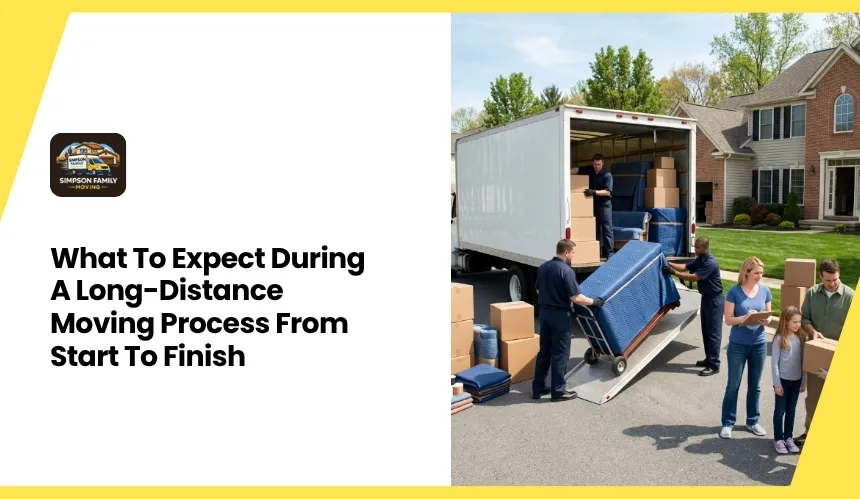
What To Expect During A Long-Distance Moving Process From Start To Finish
Long-distance relocation involves far more planning and coordination than a standard local move. Transporting household belongings across state lines or over long distances requires careful scheduling, inventory management, route planning, protective packaging, transportation compliance, and delivery coordination. Without proper preparation, homeowners often experience delays, damaged items, scheduling confusion, and unexpected logistical complications during the moving process.
Professional long-distance movers help manage these challenges through structured relocation systems designed to improve transportation efficiency and reduce operational stress. From initial estimates and packing preparation to loading procedures, transit tracking, and final delivery coordination, every stage of the moving process follows a sequence that affects timing, cost, and overall relocation success.
Understanding how the long-distance moving process works from start to finish helps homeowners prepare more effectively while avoiding common relocation problems. The following sections explain what typically happens during each stage of a long-distance move and why professional coordination plays such an important role throughout the relocation timeline.
The Moving Process Usually Begins With A Detailed Estimate And Inventory Review
The first stage of most long-distance moves involves evaluating the scope of the relocation itself. Professional movers assess the volume of belongings, transportation distance, access conditions, scheduling requirements, and service needs before preparing an official estimate.
This early planning phase helps establish realistic timelines and logistical expectations for the move.
What Movers Evaluate During The Initial Consultation
Long-distance moving estimates involve more than simply counting boxes. Moving companies evaluate multiple operational factors that affect transportation complexity and labor requirements.
The consultation process often includes:
- Household inventory review
- Furniture size evaluation
- Distance calculation
- Staircase or elevator access
- Packing service requirements
- Storage needs
- Vehicle accessibility
- Delivery scheduling preferences
These details help movers determine truck size, crew requirements, transit planning, and estimated transportation costs.
Why Accurate Inventory Lists Matter During Long-Distance Moves
Inventory organization becomes especially important during cross-state or long-haul relocation because transportation coordination depends heavily on cargo planning.
Detailed inventories help:
- Prevent misplaced items
- Improve truck organization
- Simplify unpacking
- Reduce loading confusion
- Support valuation protection documentation
- Improve delivery accuracy
Professional movers often label and categorize items carefully to improve shipment tracking throughout transit.
Packing And Preparation Usually Determine Transportation Safety
Packing quality directly affects how well belongings survive long-distance transportation. Extended travel exposes household items to vibration, shifting, road impact, and repeated handling during loading and unloading.
Improper packing increases the likelihood of damaged furniture, broken electronics, and crushed fragile items during transit.
What Professional Packing Services Typically Include
Many long-distance movers offer packing services designed specifically for extended-transportation protection.
Packing procedures often involve:
- Fragile item wrapping
- Furniture padding
- Electronics protection
- Mattress covering
- Custom box sizing
- Dish packing systems
- Secure labeling procedures
- Load stabilization preparation
These methods help minimize shifting and impact damage during long-distance transportation.
Why Decluttering Before Moving Improves Efficiency
Long-distance moving costs often depend partly on shipment size, transportation weight, and loading volume. Removing unnecessary items before packing significantly simplifies the relocation process.
Decluttering before moving may help reduce:
- Packing time
- Transportation costs
- Loading complexity
- Unpacking workload
- Storage requirements
Many homeowners use relocation as an opportunity to organize belongings before transitioning into a new property.
Loading Day Follows A Structured Coordination Process
Loading day is one of the most operationally important stages of the moving process because truck organization directly affects transportation safety, delivery efficiency, and item protection.
Professional moving crews follow systematic loading procedures designed to maximize cargo stability throughout the journey.
How Movers Protect Furniture During Loading
Large furniture pieces remain vulnerable to scratches, dents, moisture exposure, and shifting movement during loading procedures.
Professional movers often use:
- Moving blankets
- Stretch wrap
- Corner protectors
- Tie-down systems
- Appliance padding
- Protective floor coverings
These materials help reduce surface damage during both transportation and property access.
Why Truck Weight Distribution Matters During Transit
Improper truck loading can create cargo instability, increasing the risk of damage to belongings during long-distance transportation.
Movers carefully organize shipments based on:
- Weight distribution
- Fragile item placement
- Furniture stability
- Accessibility sequencing
- Load balance
Strategic loading helps minimize cargo movement and improve transportation safety over long distances.
Transportation And Transit Coordination Require Constant Logistics Management
Once the shipment leaves the property, the transportation stage begins. Long-distance moves often involve route planning, scheduling coordination, fuel management, weather monitoring, and delivery timing adjustments throughout the trip.
Transit management becomes especially important during interstate relocation, where timing and transportation regulations affect scheduling accuracy.
Why Long-Distance Transportation Timelines Vary
Unlike local moves, long-distance deliveries are influenced by multiple logistical variables beyond simple mileage calculations.
Transit timing may be affected by:
- Traffic conditions
- Weather disruptions
- Road construction
- Transportation regulations
- Fuel stops
- Multi-shipment routing schedules
- Delivery sequencing
Because of these variables, delivery windows are often estimated within a broader timeframe rather than a precise arrival hour.
How Shipment Tracking Improves Moving Transparency
Many professional moving companies provide shipment tracking updates throughout the transportation process. Tracking systems help homeowners monitor delivery progress while reducing uncertainty during transit.
Tracking communication may include:
- Departure confirmation
- Estimated arrival updates
- Transit progress notifications
- Delivery coordination calls
- Schedule adjustments
This visibility helps homeowners prepare more effectively for unloading and move-in scheduling.
Delivery And Unloading Complete The Relocation Process
The delivery stage involves more than unloading boxes from the truck. Professional movers typically coordinate furniture placement, inventory verification, damage inspection, and unloading organization to complete the relocation efficiently.
A structured delivery process helps reduce confusion during move-in.
What Happens During Final Delivery Appointments
Delivery crews usually follow organized unloading procedures based on room labeling systems and inventory sequencing established earlier in the move.
The delivery process may include:
- Inventory verification
- Furniture placement
- Box organization by room
- Reassembly of furniture
- Damage inspection
- Packaging material removal
This structured unloading process helps simplify post-move setup.
Why Immediate Item Inspection Is Important
Inspecting belongings during delivery helps identify transportation-related damage before the move is fully completed.
Homeowners should examine:
- Furniture surfaces
- Electronics
- Fragile items
- Appliances
- Glass components
- Structural damage signs
Early inspection helps streamline claims processes if transportation-related issues are discovered.
Storage Services Are Sometimes Included During Long-Distance Relocation
Some long-distance moves involve temporary timing gaps between departure and final move-in dates. In these situations, moving companies may provide short-term or long-term storage solutions.
Storage coordination helps reduce scheduling pressure during delayed occupancy situations.
Why Temporary Storage Is Sometimes Necessary
Several relocation situations may require temporary storage during a move.
Common examples include:
- Delayed home closings
- Construction completion delays
- Lease timing conflicts
- Temporary housing transitions
- Downsizing preparation
Storage flexibility helps homeowners avoid rushed relocation decisions.
How Professional Storage Protects Household Items
Professional moving storage facilities are typically designed to minimize exposure to moisture and temperature fluctuations and to reduce security risks during temporary storage periods.
Storage protection methods may include:
- Climate-controlled environments
- Inventory tracking systems
- Secure facility access
- Furniture padding
- Organized container storage
These systems help preserve belongings until final delivery occurs.
Communication Throughout The Process Helps Reduce Relocation Stress
One of the most important aspects of successful long-distance relocation is clear communication between homeowners and moving coordinators. Uncertainty about scheduling, delivery timing, inventory handling, or transportation progress often increases relocation-related stress.
Professional movers help reduce this pressure through structured communication systems.
Why Moving Coordination Matters During Long-Distance Relocation
Long-distance moves involve multiple operational stages that must remain synchronized throughout the transportation process.
Effective coordination helps improve:
- Scheduling accuracy
- Delivery preparation
- Inventory organization
- Route planning
- Customer expectations
- Transportation efficiency
Clear communication often prevents avoidable misunderstandings during relocation.
How Experienced Movers Help Simplify Complex Relocations
Professional movers understand how to manage relocation variables that many homeowners encounter only once or twice in their lifetime.
Their experience helps streamline:
- Packing organization
- Transportation scheduling
- Loading efficiency
- Damage prevention
- Delivery coordination
- Interstate logistics management
This operational familiarity often reduces both physical and emotional strain during major relocations.
Final Perspective
Long-distance relocation involves a carefully coordinated process that extends far beyond transporting belongings between properties. Packing quality, inventory organization, transportation logistics, route planning, loading stability, delivery coordination, and communication all play major roles in determining how smoothly the move progresses.
Professional long-distance movers help simplify this process with structured relocation systems that improve transportation safety, reduce scheduling confusion, and minimize operational stress. Understanding each stage of the moving process allows homeowners to prepare more effectively while improving overall relocation efficiency from start to finish.
Frequently Asked Questions
Transit timelines vary depending on distance, route conditions, shipment size, weather, transportation schedules, and delivery coordination. Some moves may take several days, while larger interstate relocations can require longer delivery windows depending on the complexity of logistics.
Professional movers often provide packing services, loading and unloading, furniture protection, transportation coordination, storage options, shipment tracking, inventory management, and delivery scheduling throughout the relocation process.
Extended transportation increases the risk of shifting, vibration, and impact damage. Professional packing methods help stabilize fragile items, protect furniture surfaces, improve truck organization, and reduce transportation-related damage during long-haul relocation.
Many moving companies offer temporary or long-term storage solutions when homeowners experience delayed move-in schedules, temporary housing transitions, or closing-date conflicts during relocation.
Moving costs are commonly influenced by transportation distance, shipment size, labor requirements, packing services, accessibility conditions, storage needs, and delivery timing flexibility during the relocation process.
Traffic conditions, weather disruptions, transportation regulations, road closures, and route coordination may affect delivery schedules during interstate transportation. Professional movers typically provide updated delivery windows as transit conditions change.